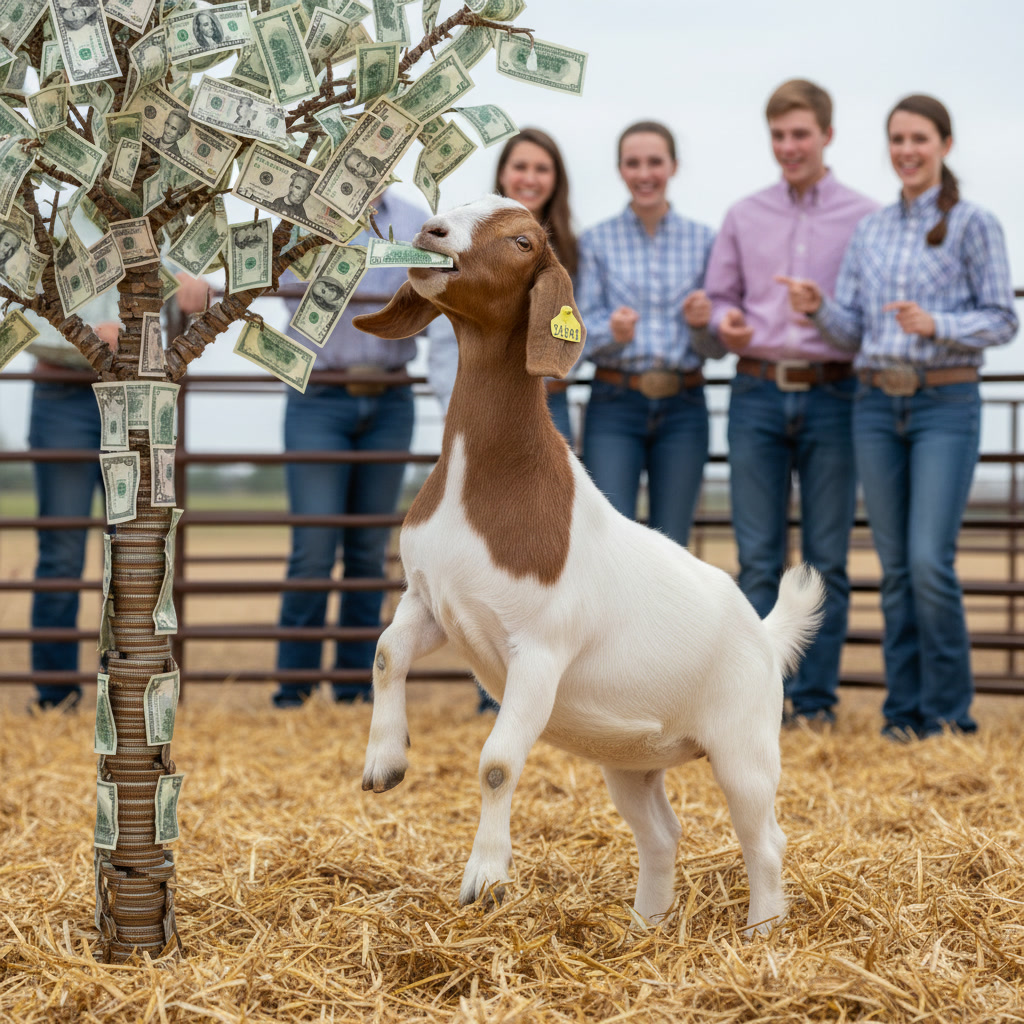
If you’re fundraising mostly by yourself, focus on options where you can take the reins without needing a big team.
1) Online Fundraising (Low Effort, Scalable)
Partner with a fundraiser that gives you a personal online link so supporters can order directly and you don’t have to store or deliver much.
- Chapter-approved online style sales like Dutch Mill bulbs or FFA cookie dough.
- Local favorites like Dudley’s breads (or similar in your area). You’d be surprised how many teachers, staff, and peers will pay to have a product delivered.
- Partner with a business that makes custom FFA / 4-H / Grange items (shirts, sweatpants, decals, hats, magnets, ornaments) where orders ship or are handled for you.
- I create a custom store for schools to sell products and I provide products in bulk for events. In the past, I’ve made ornaments for students to sell at a holiday park event. I also taught students virtually how to make wreaths and other arrangements to sell for profit.
Why it works: family and friends outside your town can support you, you can talk to your community, and you can share the link weekly with a poster QR code or using professional social media accounts with adult supervision.
2) SAE Project Money-Maker (Build Funds + Résumé)
Pick an agribusiness SAE that you can do solo after school or weekends:
- Dog walking / pet care (especially if local options are limited)
- Let your skills shine by focusing on a service you can provide.
- My kids have earned anywhere from $50 making macrame reusable produce bags to $900 when two floral students hosted flower crown workshops with a food safe charcuterie board.
- Or maybe you prefer mowing lawns, picking up animal waste, or providing a food safe meal service with your food handling certification you earned in your ag ed program.
- Seasonal Services you can run alone (holiday pet sitting, stall cleaning, small chore help).
- Perfect for those taking vacations for the holidays, as long as you practice biosecurity, stay safe, and know how to lock a gate.
- I’ve had students hired as ranch hands, camel farm milkers, and honey processors.
Tip: Price it simply (example: $25–$40 per visit). Track hours and income for your SAE records or agriculture project recordbooks.
3) Grants and Scholarships for Educational Travel Expenses
Some states, counties, schools, and ag organizations offer funding to help students attend educational events.
What to watch:
- Eligibility Rules
- Allowable and Non-Allowable Use of Funds
- Due Dates
- Competition and Grade Level
- When Money is Released (some may reimburse after deadlines)
This can cover things like registration, hotel, meals, and sometimes transportation, depending on the program.
4) Local Sponsorships (you asking professionally, 1-on-1)
This is one of the fastest solo options. Ask local agricultural supporters like:
- Farm Bureau
- Local feed stores, ranch supply shops
- Ag businesses, service clubs, community foundations
Show up polished (uniform if approved, or interview attire with a matching set of boots and belt) and keep it positive:
- What you’re doing in FFA, Grange, and/or 4H and why they should care
- What this trip will help you learn
- How it connects to your future goals
- Examples: Career development workshops, collaboration with industry professionals, and networking with future leaders / classmates
- What you need ($25, $50, $100 options)
Key warning: Be confident, but never complain or pressure. Practice what you’ll say first. As the saying goes, “the squeaky wheel gets the grease, but it could also get replaced.” Focus on building bridges and highlighting the benefits of supporting your goals.
5) Ask about “Equitable Access” or Assistance Funds through your program
Some schools and programs have funds to support students who qualify so they can attend trips without financial hardship. It may help with hotel, food, registration, and occasionally transportation / parking.
Ask your organization leaders for more information about local available program assistance. Be prepared to provide information about the event (such as a letter provided by your teacher) and possibly required documentation to prove need (*not always needed, it depends on your organization).
6) Start Early because Paperwork Takes Time
Grants, sponsorships, and planning events involving travel often require:
- Forms, signatures, approvals
- Examples: school board meetings, financial team, booster meeting, FFA meetings for ASB fundraising approvals
- Waiting periods
- Sometimes prepaying for registration or lodging before reimbursement
So the sooner you start, the better.
7) Animal Sales or Projects (only if it fits your plan)
Animal projects can help, but don’t jump in just to fund a trip. If you already have animals:
- Sell offspring or products
- Use funds from a market sale or breeding contract
- Ask if your school has a booster club or ASB account for agriculture education students
- Some boosters and ASB accounts let financial donors pay the school directly online for specific student uses
- Host an event with your animals and charge a fee or ask for donations
- Examples:
- Ask your local farmers’ market if they have non-profit booths available for an educational animal photo shoot
- Set up a Poo Plot Bingo event with your animals after checking your organization’s fundraising rules
- Host a farm visit event where you teach people about the animal you raise, safe handling, and farm chores (like composting)
- Convince teachers to sign up for a kiss-an-animal event
- Put teachers’ names on jars
- Let your community know that the teacher with the biggest piggy bank by X date, gets to put on animal-safe lipstick and kiss an animal during lunch *purely for charitable fundraising purposes, not at all for entertainment . . .
- Be mindful of zoonotic diseases, biosecurity, and the safety of your animal and people
- Always clean up after the event, arrive to class on time, and if you have to leave your class early to set up make sure you talk to your teacher so you arrive on time for set up
- Examples:
Quick $800 Solo Plan (Example)
- Online fundraiser link: $300
- SAE or Project income (10 jobs at $30 – $40): $300 – $400
- 2 – 4 sponsors at $50 – $100: $200 – $400
Pro Communication Tips
- Never meet with a stranger alone. Always have a trusted parent, guardian, or another approved adult with you, and meet in a public place when possible. Your safety is the #1 priority, because we need future agriculture leaders like you, who take initiative to be self-sufficient, to take the industry leadership reins.
- The worst thing someone can say is “no.” Be ready for it. Practice a calm, professional response so you can handle rejection without getting emotional.
- Thank them for their consideration and their time.
- Stay confident. Shake their hand, look them in the eye, and keep your head held high.
- You can cry in the car later.
- Keep going with a new business or plan of action until you get a “yes.”
- Fundraising takes grit, and the way you respond matters. A respectful, confident reaction can build bridges that help you later, even if the answer today is no.
- Be prepared for a yes, too.
- Have a plan to contact them for a follow-up, provide a firm handshake, and thank them.
- Using their contact info, send an enthusiastic ‘thank you’ while you solidify dates professionally and show your appreciation.
You’ve got this. You are motivated enough to take the initiative to achieve your goals. I believe in you!
If you need help with anything, don’t hesitate to reach out.
Tagged assistance funds, career development, communication, connections, equity, expenses, follow up, food, fundraiser, fundraising, grant, hotel, income, independent, local, low effort, money, networking, online fundraisers, parking, pro tips, professional, registration, SAE project, scalable, scholarship, seasonal services, skills, solo, sponsorships, transportation