Achieve Your Goals With
Bueno Animal Training
Our mission is to empower students, families, and educators with effective animal training that fosters safe, healthy, and lifelong skills while building stronger connections between people, their animals, and the community.

Expert Trainer
Your trainer, Ms. Bueno, holds a bachelor’s degree in animal science and brings over 12 years of hands-on experience in training animals, both in-person and virtually.
Learn more about your coach below!

Effective Courses
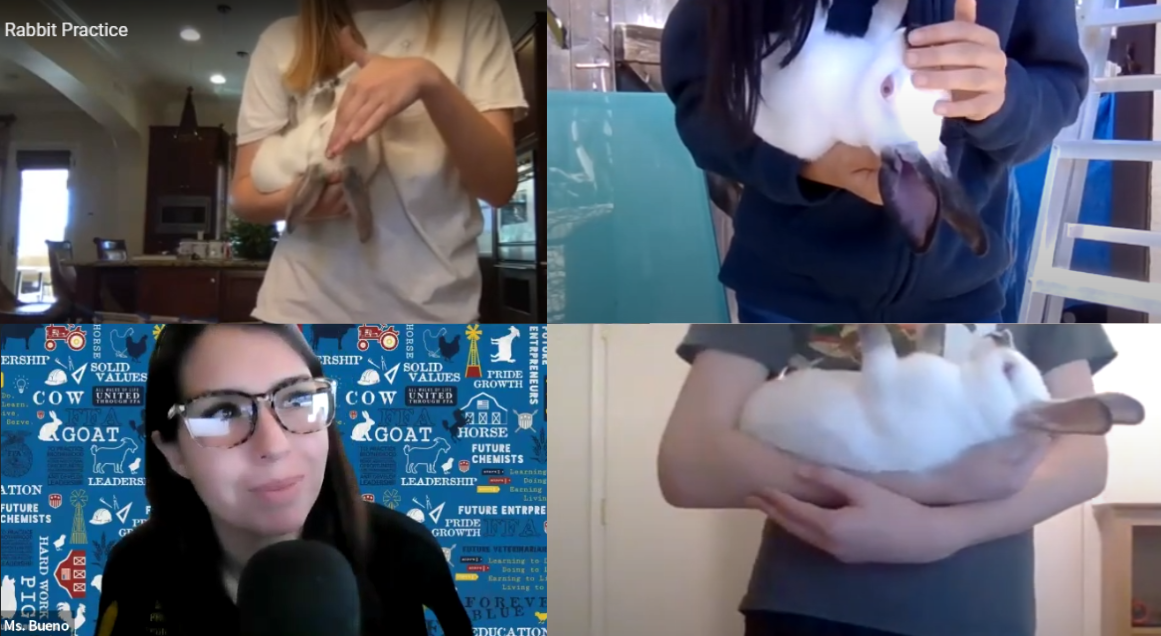
Top two virtual course highlights:
1. Personalized Private Coaching Sessions: Train one-on-one online with Ms. Bueno for tailored guidance, support, and immediate feedback.
2. Self-Paced Planner Style Guide: Track your progress with an interactive comprehensive guide, which includes how-to’s, do’s and don’ts, safety tips, supplies lists, and more.

Earn Certificate
Each course includes a certificate of completion that documents the skills learned and time invested.
1. For Students: Show your skills, strengthen resumes, and improve applications for shadowing, job opportunities, college, scholarships, and grants. Allows students to gain confidence by recognizing their own progress.
2. For Educators: Track student progress, showcase program achievements, and support professional development.
Guidance From an Experienced Showmanship Coach
Meet Ms. Bueno
Your Personal Animal Science & Training Coach
With over a decade of experience in animal handling and award-winning teaching, I help students of all levels. You’re in the right place to build your skills, confidence, and enjoy a successful project. You are guaranteed to learn something new, even if you’ve never touched an animal or you’ve grown up on a farm.
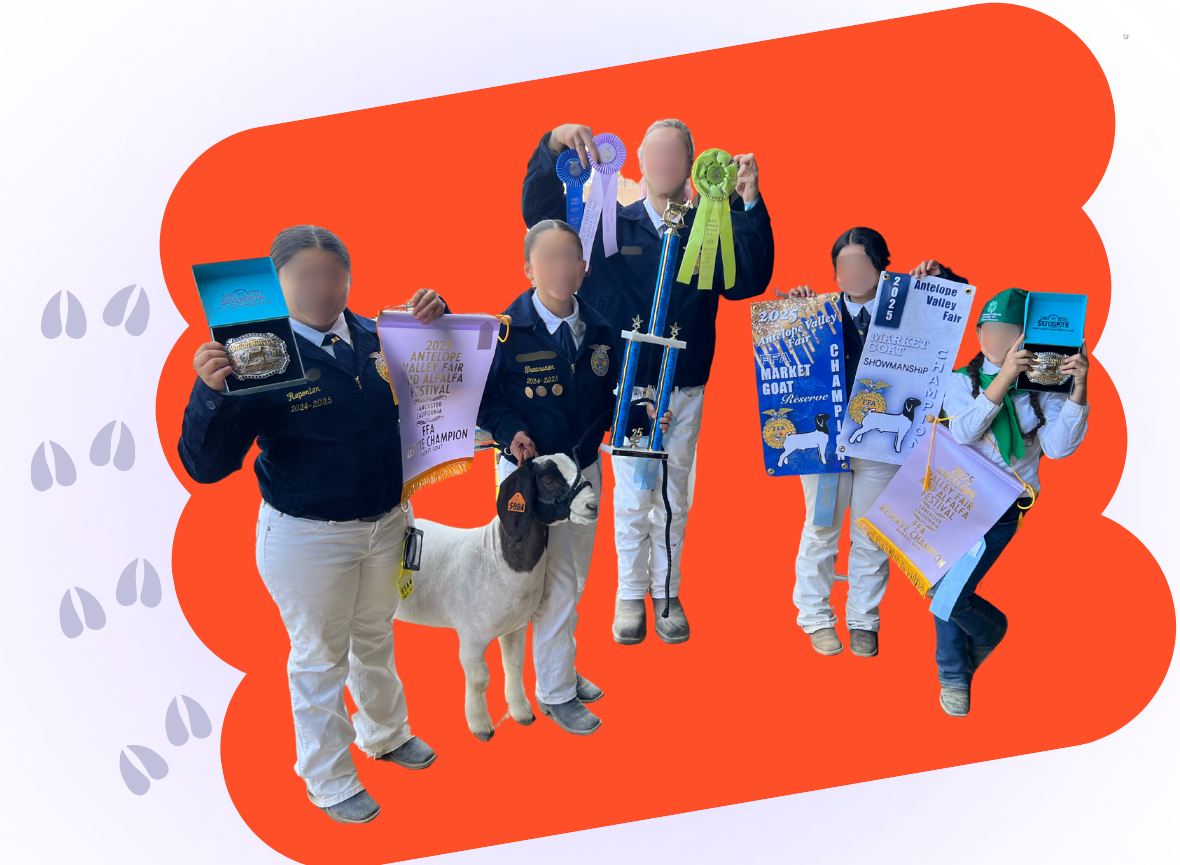
I hold a CTE teaching certificate in Agriculture and Natural Resources, a bachelor’s degree in animal science with a focus in meat science, and a minor in food safety. I have guided students to place top in both showmanship and market classes. My students have gone on to win grand champion, reserve grand champion, best of breed, round robin, and master showmanship buckles and banners. **These competitions may have different names in different states.**
Most importantly, my goal is to help you have an amazing experience with your animals, gain skills that last a lifetime, and feel the same joy I do when working with animals. I believe every student deserves equitable access to agriculture education, either virtual or in person, so you can make your career dreams a reality.
I have seen firsthand that students who get the opportunity to raise and show livestock become excellent communicators, caring people, and responsible adults.
Do you have any questions?
Frequently Asked Questions
What species do you help with?
I work with rabbits, guinea pigs, dogs, chickens, turkeys, goats, lambs, pigs, and cattle. If you’re just getting started or want help with more than one species, I will create a personalized lesson plan for you.
How does online livestock coaching work?
After you sign up, you will complete a short intake form to tell me about your animal, experience, and goals. Then your teacher will build lessons just for you. You’ll receive videos, tips, supply lists before each practice, homework challenges between lessons, and coaching calls to guide your training step-by-step. Before our next practice, the student shares successes and targets new areas of growth to personalize each following lesson.
The lessons are very similar to a showmanship clinic, except you get to work with your animal, at your facility, with an instructor who gives you immediate and personalized feedback to increase your showmanship skills.
Do I need a lot of experience to sign up?
Nope! I work with total beginners, advanced showmen, and everyone in between. Whether it’s your first fair, your alumni year, or college level, I have tips to help you learn new skills.
What if I don't have my animal yet?
That’s a perfect time to start! I can help you choose the right species for your skill set/age, select your animal, prepare your setup, and understand what to expect before the project begins.
I taught Livestock Judging and am happy to teach you how to find a quality animal by collaborating with breeders as close to your location as possible. If you’re unfamiliar with animal anatomy, I can provide lessons that help you choose a sound, well-structured animal. I can even join you virtually while you select your animal to help you make the best choice.
If needed, I can also help you find scholarships, grants, and loan programs to purchase livestock. I take pride in helping students learn how to budget for their projects so they can hopefully invest money next year into a new or continued project. While no one can promise students will break even, these projects are similar to sports investments where students gain skills to be competitive candidates in future college and career applications.
Can parents, siblings, friends, or advisors, leaders, and lecturers join in?
Absolutely. While the lesson you purchase only includes focus on the species you selected and people who paid for course registration, I encourage family and project supervisors to be part of the learning process. Our in-person lessons are one hour, so please talk with those you plan to invite prior to the lesson about time management and questions you’re comfortable with. If I notice the student feels uncomfortable, I will advocate on the student’s behalf.
For certain lessons, it’s nice to have an extra pair of hands, other viewpoints, additional camera angles, people to pretend they’re the judge, or even the crowd. Prior to your lesson, you may have an assignment that asks for additional people to help with our virtual lesson. With the right guidance, these additional challenges can increase the comfort and confidence of both the student and animal by recreating what they can experience at these competitions in the arena.
*DO NOT TRY THIS WITHOUT A TRAINED PROFESSIONAL. Without proper supervision of a trained professional, recreating a “fair experience” can set training back, make your animal spook more easily, or injure the student, animal, or a bystander.* I use animal science training techniques to build confidence and establish safe handling practices for possible scenarios that could be dangerous.
How much does it cost?
Pricing depends on the number of species, the topics you want to cover, and the number of one-on-one coaching sessions you select.
I offer options for all budgets, including single lessons, bundling discounts for multiple lessons, long-term individual support, group lessons, and scholarship opportunities. Just reach out, and we will find something that works for you.
Do I need special technology or equipment?
You will need:
- A device with internet access (like a phone, tablet, or computer) that has a camera so I can provide immediate feedback while you work with your animal(s) during our lessons.
- Wireless headphones with a built-in microphone. Most wireless headphones come with a built-in microphone.
- Something to set up your device on so it doesn’t fall over (camping chair or tripod).
- Clothing that is professional and safe when working with livestock such as jeans free of holes, shirts that fully cover your abdomen, durable work shoes such as rubber soled boots, hair tie is recommended for long hair so it isn’t pulled, and weather appropriate items such as a hat when it’s sunny.
- Supplies vary depending on your lesson.
Upon sign up, you will have access to the supply lists for your lesson within your course and tech tips to make setup easy!
To preview your selected lesson’s set up for supplies, click the curriculum tab before or after purchase.
What topics can I get help with?
Some popular topics include, but are not limited to:
- Halter breaking, handling, and daily training routines
- Showmanship skills and contest prep
- Fair prep and what to pack
- Building muscle and feeding programs
- Fixing behavior issues (spooking, spinning, squirmy, refusal to walk, etc.)
- Record books and speech coaching
- Livestock selection
- Buyers’ letters and collaborating with local businesses
- And more!
After you sign up, you will select your goals. If you have more than one lesson, we will keep an open dialogue to ensure your training is satisfying your needs.
What's the difference between the types of competitions? Do we get to keep our animals?
While the names of competitions vary state by state and rules vary by fair, here is a general overview:
- Companion / Best of Breed:
- In this competition, you show an animal that is a pet or breeding project.
- The judge compares your animal against other competitors to see which animal is the healthiest and best meets breed standards.
- You usually bring these animals home.
- Market:
- In this competition, you show a livestock animal or a pen of three small livestock animals.
- The judge is looking at how well-muscled your animal is, and if you have a pen of three, they will also compare how similar the entire pen is.
- While you typically auction these animals at the fair, some competitions limit the number of animals that can be sold in your species, while others offer a “scratch” option. Scratch means you can remove your animal from the auction block in most cases (some fairs have rules against scratching champion animals). Most school-based programs will not allow you to bring the animal back to their school farm, so if you scratch please have a plan in place to keep your animal or provide them with an alternative home.
- Showmanship:
- In this competition, you will show your animal in specific styles based on your species.
- The judge typically evaluates your knowledge of their project, the skill of the handler, and how well-trained your animal is.
- Showmanship is one of my favorite competitions. I have seen a variety of ways judges test competitors’ composure, sportsmanship, and training. I integrate these challenges into our lessons to provide my students with the skillset to handle any challenge a judge gives you.
- Bringing your animal home depends on whether you are in a market, best of breeds, companion, or group pens competition.
- Groups / Pens:
- This competition appears in a wide variety of ways from group pen competitions with your friends, a group of animals owned by a single competitor, to a breeding female (dam/sow/cow) with offspring, and so many more types of competitions.
- The judge evaluates based on your species, association, and fair rules.
- Typically, you bring these animals home.
- Costume:
- In this competition, you and your animal dress in costumes.
- Judges can compare the attractiveness of outfits, use of color and style, poise and presentation, grooming, behavior, decoration, garments made by the competitor, and more.
- There is a wide variety of specialty contests I can help with. Bringing your animal home depends on whether you are in any of the bolded competitions above numbered 1, 2, or 3.
- Open / Junior or Youth:
- These divisions separate adults from youth competitors.
- Open competitions are usually open to any adult or child.
- Junior or Youth divisions typically have an age cap of 19 years old if they are showing as an alumni (one year out of college).
- Junior or Youth competitions typically have classes limited specifically for members of 4-H, FFA, Grange, and independent organizations. Some fairs provide awards based on students associated with these various organizations.
Upon sign-up, I will help you learn more about your competition strategies for success.
What if I need help fast before fair?
Reach out! I offer flexible coaching options, including crash courses, bundled courses, and prep sessions for students who need last-minute support.
Do you offer support during fair?
Absolutely! I offer flexible video coaching options, including class breakdown, schedule creation, and preparation recommendations for students and/or families who need support at fair.
*Please note, it is a common fair rule that only the exhibitor can handle their animal. Typically, no one else can touch the animal at the fair depending on your fair rules. It is very important that students who are showing have prepped their animal before fair, are comfortable handling their animal without help, and can groom/clip/shear/bathe/blow dry their animal independently.
What makes this program different?
This isn’t one-size-fits-all. Your lessons are based on your animal, your goals, and your experience level. Plus, I’m a certified CTE Agriculture teacher with over a decade of hands-on training experience, and I’ll be cheering you on the whole way.
Enhance your skills with the best online courses
You can start and finish one of these popular courses under a day- for free. Check out the courses and start as you want.
Morbi sagittis hendrt nulla mis ultricies. Fusce tempor, tortor et vehicula posuere, cras en diam pismi est iaculis quam majority have alteration in some form, by injected humour.
- Learn from the experts
- Go at your own pace
- Quality Content
- Learn at all levels

Learn from the best instructors
Sed ut perspiciatis unde omnis iste natus error sit voluptatem accusantium doloremque laudantium, totam rem aperiam, eaque.

Richard Taylor
Marketing Instructor

Sophie Geller
Graphics Instructor

Emily Gaarder
Musical Instructor

Andrew Holland
Design Instructor
Student feedback
Sed ut perspiciatis unde omnis iste natus error sit voluptatem accusantium doloremque laudantium, totam rem aperiam, eaque.
Honestly UI/UX design course
Sed ut perspiciatis unde omnis iste natus error sit voluptatem accu santium dolor emque laud ant ium, totam rem ape riam, eaque ipsa.
Alisa Ray
Designer
Great support for the beginner
Unde omnis iste natus error sit voluptatem accu santium dolor sed ut perspiciatis uem que laud antium, totam rem aperiam, eaque.
Stephen Allen
Marketer
Amazing teaching methods
Voluptatem accu santium dolor emque laud antium, totam rem aperiam, eaque ipsa quae abed ut perspiciatis unde omnis iste natus.
John Brock
Developer
Do you have any questions?
Sed ut perspiciatis unde omnis iste natus error sit voluptatem accusantium doloremque laudantium, totam rem aperiam, eaque.
Frequently Asked Questions
What species do you help with?
I work with rabbits, guinea pigs, dogs, chickens, turkeys, goats, lambs, pigs, and cattle. If you’re just getting started or want help with more than one species, I will create a personalized lesson plan for you.
How does online livestock coaching work?
After you sign up, you will complete a short intake form to tell me about your animal, experience, and goals. Then your teacher will build lessons just for you. You’ll receive videos, tips, supply lists before each practice, homework challenges between lessons, and coaching calls to guide your training step-by-step. Before our next practice, the student shares successes and targets new areas of growth to personalize each following lesson.
The lessons are very similar to a showmanship clinic, except you get to work with your animal, at your facility, with an instructor who gives you immediate and personalized feedback to increase your showmanship skills.
Do I need a lot of experience to sign up?
Nope! I work with total beginners, advanced showmen, and everyone in between. Whether it’s your first fair, your alumni year, or college level, I have tips to help you learn new skills.
What if I don't have my animal yet?
That’s a perfect time to start! I can help you choose the right species for your skill set/age, select your animal, prepare your setup, and understand what to expect before the project begins.
I taught Livestock Judging and am happy to teach you how to find a quality animal by collaborating with breeders as close to your location as possible. If you’re unfamiliar with animal anatomy, I can provide lessons that help you choose a sound, well-structured animal. I can even join you virtually while you select your animal to help you make the best choice.
If needed, I can also help you find scholarships, grants, and loan programs to purchase livestock. I take pride in helping students learn how to budget for their projects so they can hopefully invest money next year into a new or continued project. While no one can promise students will break even, these projects are similar to sports investments where students gain skills to be competitive candidates in future college and career applications.
Can parents, siblings, friends, or advisors, leaders, and lecturers join in?
Absolutely. While the lesson you purchase only includes focus on the species you selected and people who paid for course registration, I encourage family and project supervisors to be part of the learning process. Our in-person lessons are one hour, so please talk with those you plan to invite prior to the lesson about time management and questions you’re comfortable with. If I notice the student feels uncomfortable, I will advocate on the student’s behalf.
For certain lessons, it’s nice to have an extra pair of hands, other viewpoints, additional camera angles, people to pretend they’re the judge, or even the crowd. Prior to your lesson, you may have an assignment that asks for additional people to help with our virtual lesson. With the right guidance, these additional challenges can increase the comfort and confidence of both the student and animal by recreating what they can experience at these competitions in the arena.
*DO NOT TRY THIS WITHOUT A TRAINED PROFESSIONAL. Without proper supervision of a trained professional, recreating a “fair experience” can set training back, make your animal spook more easily, or injure the student, animal, or a bystander.* I use animal science training techniques to build confidence and establish safe handling practices for possible scenarios that could be dangerous.
How much does it cost?
Pricing depends on the number of species, the topics you want to cover, and the number of one-on-one coaching sessions you select.
I offer options for all budgets, including single lessons, bundling discounts for multiple lessons, long-term individual support, group lessons, and scholarship opportunities. Just reach out, and we will find something that works for you.
Do I need special technology or equipment?
You will need:
- A device with internet access (like a phone, tablet, or computer) that has a camera so I can provide immediate feedback while you work with your animal(s) during our lessons.
- Wireless headphones with a built-in microphone. Most wireless headphones come with a built-in microphone.
- Something to set up your device on so it doesn’t fall over (camping chair or tripod).
- Clothing that is professional and safe when working with livestock such as jeans free of holes, shirts that fully cover your abdomen, durable work shoes such as rubber soled boots, hair tie is recommended for long hair so it isn’t pulled, and weather appropriate items such as a hat when it’s sunny.
- Supplies vary depending on your lesson.
Upon sign up, you will have access to the supply lists for your lesson within your course and tech tips to make setup easy!
To preview your selected lesson’s set up for supplies, click the curriculum tab before or after purchase.
What topics can I get help with?
Some popular topics include, but are not limited to:
- Halter breaking, handling, and daily training routines
- Showmanship skills and contest prep
- Fair prep and what to pack
- Building muscle and feeding programs
- Fixing behavior issues (spooking, spinning, squirmy, refusal to walk, etc.)
- Record books and speech coaching
- Livestock selection
- Buyers’ letters and collaborating with local businesses
- And more!
After you sign up, you will select your goals. If you have more than one lesson, we will keep an open dialogue to ensure your training is satisfying your needs.
What's the difference between the types of competitions? Do we get to keep our animals?
While the names of competitions vary state by state and rules vary by fair, here is a general overview:
- Companion / Best of Breed:
- In this competition, you show an animal that is a pet or breeding project.
- The judge compares your animal against other competitors to see which animal is the healthiest and best meets breed standards.
- You usually bring these animals home.
- Market:
- In this competition, you show a livestock animal or a pen of three small livestock animals.
- The judge is looking at how well-muscled your animal is, and if you have a pen of three, they will also compare how similar the entire pen is.
- While you typically auction these animals at the fair, some competitions limit the number of animals that can be sold in your species, while others offer a “scratch” option. Scratch means you can remove your animal from the auction block in most cases (some fairs have rules against scratching champion animals). Most school-based programs will not allow you to bring the animal back to their school farm, so if you scratch please have a plan in place to keep your animal or provide them with an alternative home.
- Showmanship:
- In this competition, you will show your animal in specific styles based on your species.
- The judge typically evaluates your knowledge of their project, the skill of the handler, and how well-trained your animal is.
- Showmanship is one of my favorite competitions. I have seen a variety of ways judges test competitors’ composure, sportsmanship, and training. I integrate these challenges into our lessons to provide my students with the skillset to handle any challenge a judge gives you.
- Bringing your animal home depends on whether you are in a market, best of breeds, companion, or group pens competition.
- Groups / Pens:
- This competition appears in a wide variety of ways from group pen competitions with your friends, a group of animals owned by a single competitor, to a breeding female (dam/sow/cow) with offspring, and so many more types of competitions.
- The judge evaluates based on your species, association, and fair rules.
- Typically, you bring these animals home.
- Costume:
- In this competition, you and your animal dress in costumes.
- Judges can compare the attractiveness of outfits, use of color and style, poise and presentation, grooming, behavior, decoration, garments made by the competitor, and more.
- There is a wide variety of specialty contests I can help with. Bringing your animal home depends on whether you are in any of the bolded competitions above numbered 1, 2, or 3.
- Open / Junior or Youth:
- These divisions separate adults from youth competitors.
- Open competitions are usually open to any adult or child.
- Junior or Youth divisions typically have an age cap of 19 years old if they are showing as an alumni (one year out of college).
- Junior or Youth competitions typically have classes limited specifically for members of 4-H, FFA, Grange, and independent organizations. Some fairs provide awards based on students associated with these various organizations.
Upon sign-up, I will help you learn more about your competition strategies for success.
What if I need help fast before fair?
Reach out! I offer flexible coaching options, including crash courses, bundled courses, and prep sessions for students who need last-minute support.
Do you offer support during fair?
Absolutely! I offer flexible video coaching options, including class breakdown, schedule creation, and preparation recommendations for students and/or families who need support at fair.
*Please note, it is a common fair rule that only the exhibitor can handle their animal. Typically, no one else can touch the animal at the fair depending on your fair rules. It is very important that students who are showing have prepped their animal before fair, are comfortable handling their animal without help, and can groom/clip/shear/bathe/blow dry their animal independently.
What makes this program different?
This isn’t one-size-fits-all. Your lessons are based on your animal, your goals, and your experience level. Plus, I’m a certified CTE Agriculture teacher with over a decade of hands-on training experience, and I’ll be cheering you on the whole way.